Batterilagring4 min läsningArtikel på engelska
Balcony solar with battery storage: is a mini battery worth it in 2026?
Den här guiden finns för närvarande bara på engelska.
Kort svar
In short: a balcony battery increases your self-consumption from ~30% to as much as 80%, but payback takes longer than for a balcony solar system alone. Whether it is worthwhile depends mainly on your consumption profile.
The problem without battery storage
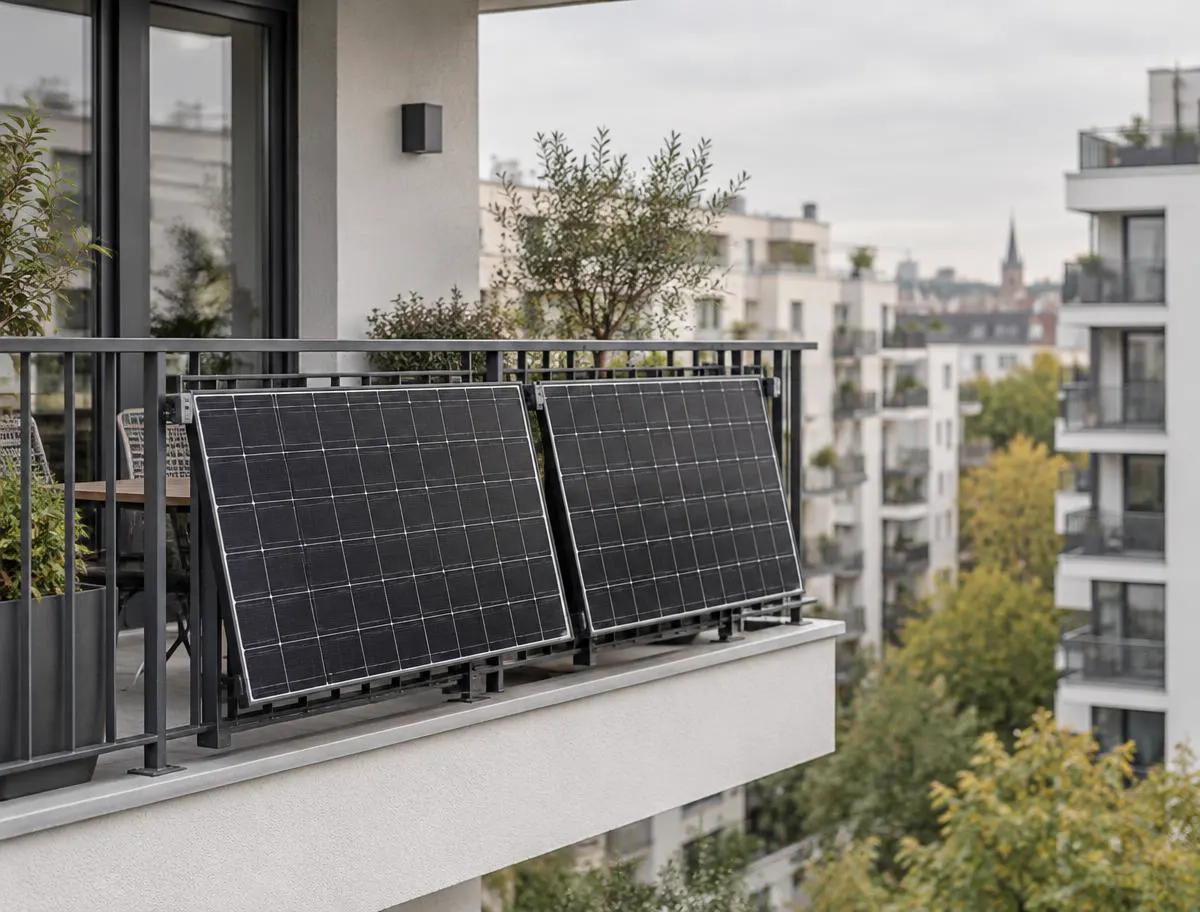
An 800 W balcony solar system produces its peak output between 10:00 and 16:00, exactly when many people who work away from home are out. Without a battery, you feed this energy into the grid and currently receive 0 cents for it in Germany (no payment for mini systems with a registered capacity below 100 W).
This means up to 70% of the electricity generated goes unused because nobody is consuming electricity at home.
How does a balcony battery work?
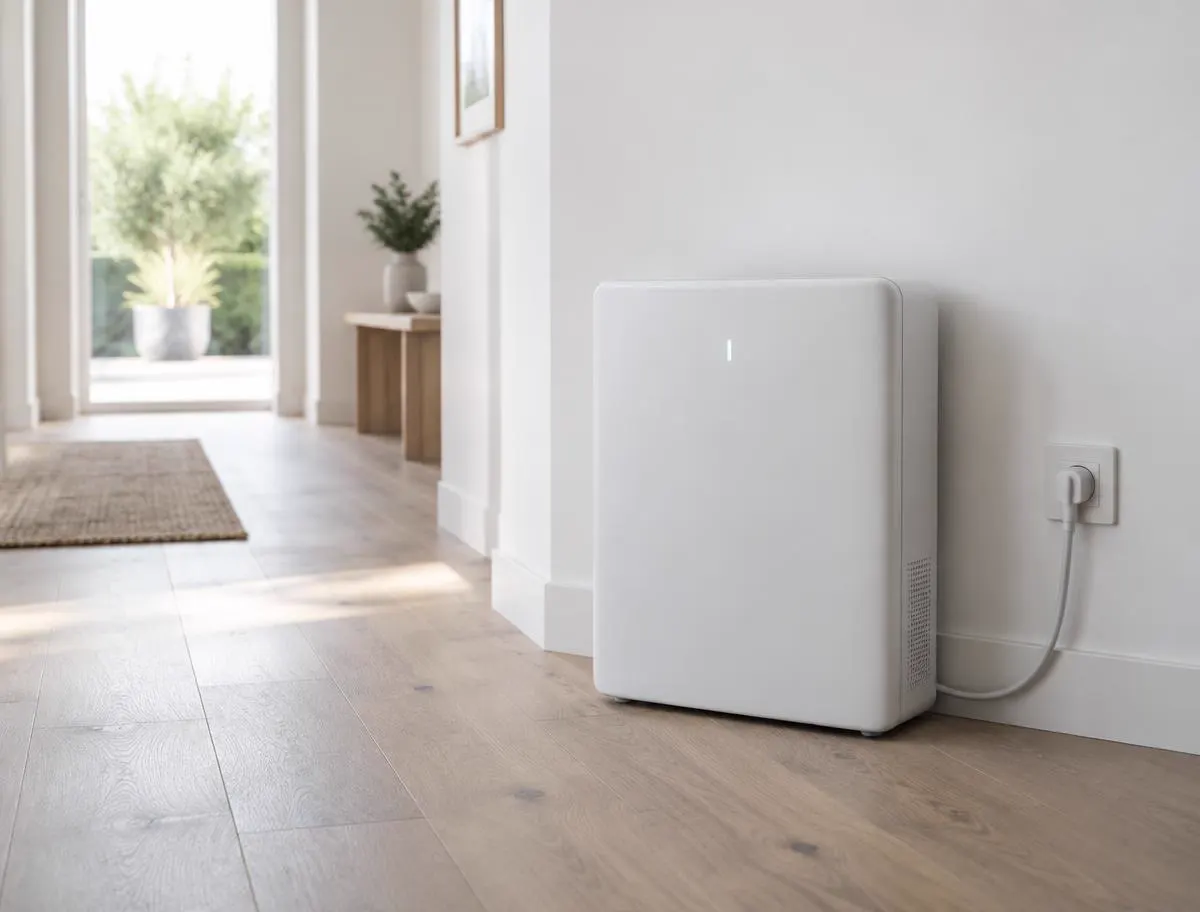
A balcony battery is a compact LiFePO4 battery (1 to 2.4 kWh) connected between the inverter and the socket. It stores surplus solar electricity during the day and releases it in the evening or at night.
Most devices offer:
- Wi-Fi monitoring through an app.
- Plug-and-play installation without an electrician.
- Charging and discharging controlled by schedules or automatically.
- A UPS function on some models (emergency power).
Popular models in 2026 at a glance
| Model | Capacity | Power | Approximate price | Special feature |
|---|---|---|---|---|
| Zendure SolarFlow AIO 2400 | 2.4 kWh | 800 W | ~€799 | Expandable to 7.2 kWh |
| Anker SOLIX E1600 | 1.6 kWh | 800 W | ~€699 | Very user-friendly app |
| EcoFlow PowerOcean Mini | 2 kWh | 600 W | ~€749 | Good cold-weather performance |
| Bluetti EP600 | 2 kWh | 800 W | ~€679 | Affordable, solid quality |
Self-consumption: with and without battery storage
| Scenario | Self-consumption rate | Annual savings |
|---|---|---|
| Without battery (working away from home) | ~25 to 35% | ~€65 to €80 |
| Without battery (working from home) | ~50 to 60% | ~€130 to €150 |
| With battery (2 kWh, working away from home) | ~70 to 80% | ~€175 to €200 |
| With battery (2 kWh, working from home) | ~85 to 90% | ~€220 to €240 |
Payback calculation: is the additional cost worthwhile?
Worked example: a household in Frankfurt whose members work away from home.
The battery barely extends the payback period while significantly increasing the annual benefit. If electricity prices rise (historically ~4%/year), the calculation improves further.
When is battery storage particularly worthwhile?
Battery storage makes sense if you:
- Are not at home during the day (an office job, children at school).
- Have high evening consumption (cooking, TV, charging an e-bike or laptop).
- Already own a balcony solar system and want to increase self-consumption.
- Think long term: electricity prices will continue to rise.
Battery storage offers less benefit if you:
- Work from home, so you consume the electricity during the day anyway.
- Have a very small household with little evening consumption.
- Primarily want to keep your investment low.
Installation: what do you need to consider?
- Check compatibility: not every battery works with every inverter. Many manufacturers offer their own complete kits.
- Additional registration in the MaStR: a battery must be registered separately in Germany’s Marktstammdatenregister (the national register). Registration is free and takes less than 10 minutes.
- No electrician needed: all common balcony batteries are plug-and-play and can be connected yourself.
- Location: batteries prefer cool, dry surroundings. A cellar compartment or covered balcony is ideal. Keep them out of direct sunlight.
Siffrorna i den här guiden är typiska exempel för Tyskland och beror på plats, väderstreck, skuggning och elpris. Ditt resultat kan avvika.
Kolla din egen plats på 2 minuter
Gratis himmelsskanning i mobilens webbläsare. Ingen nedladdning.
Starta den gratis skanningen