Recinzione e giardino5 min di letturaArticolo in inglese
Solar fences: is plug-in solar for your garden or terrace worth it?
Questa guida è per ora disponibile solo in inglese.
In breve
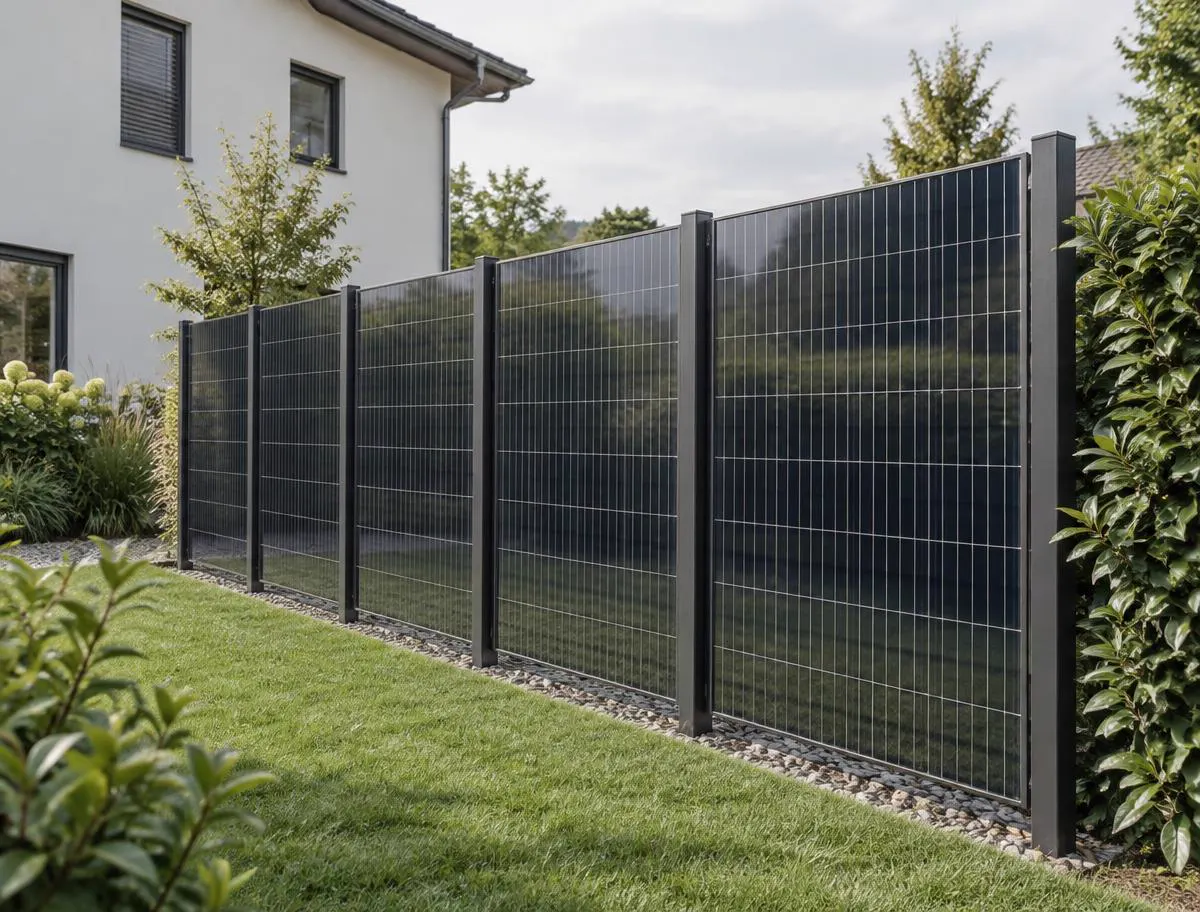
In short: a solar fence generates 20 to 30% less electricity than an optimally tilted balcony solar system, but it is often the only option if you have a garden or terrace without a south-facing balcony. It also serves two purposes: privacy screening and electricity generation.
What is a solar fence?
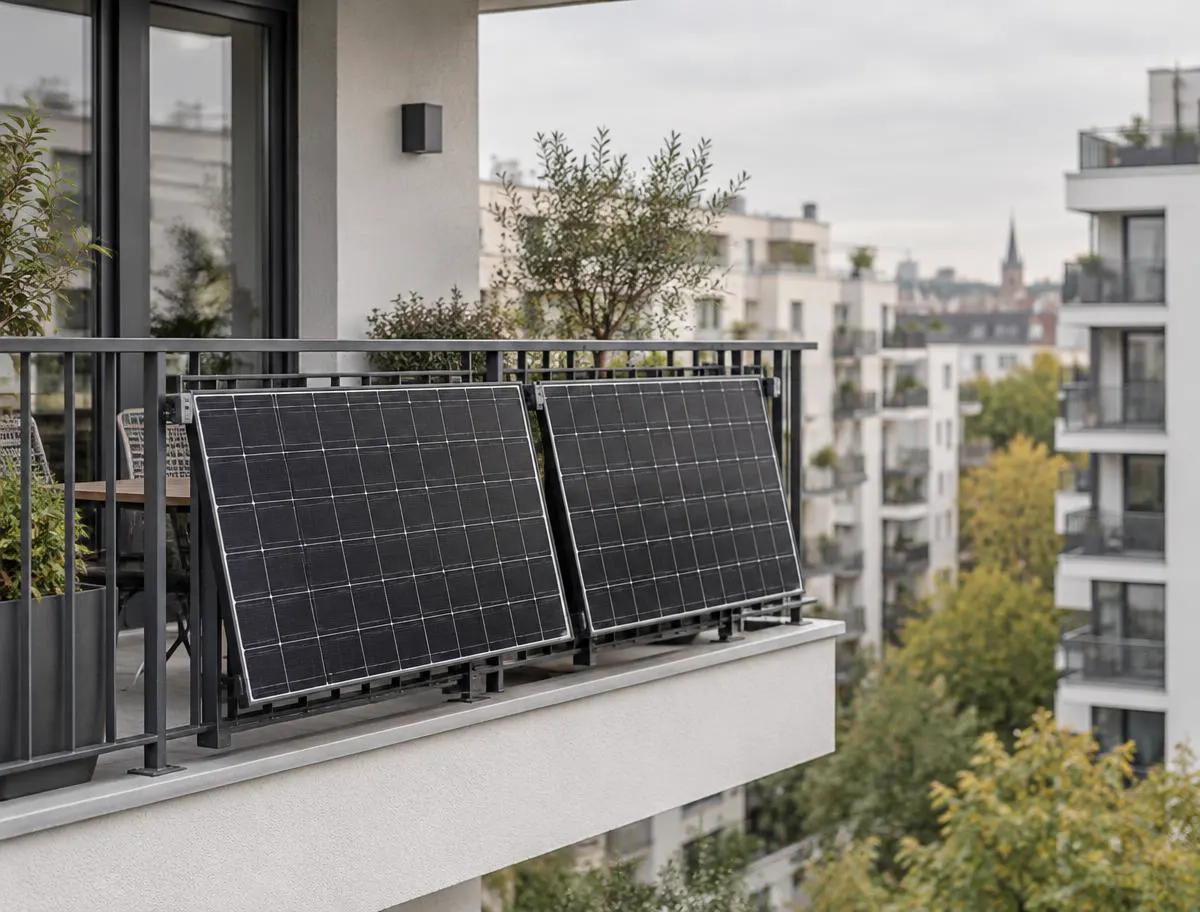
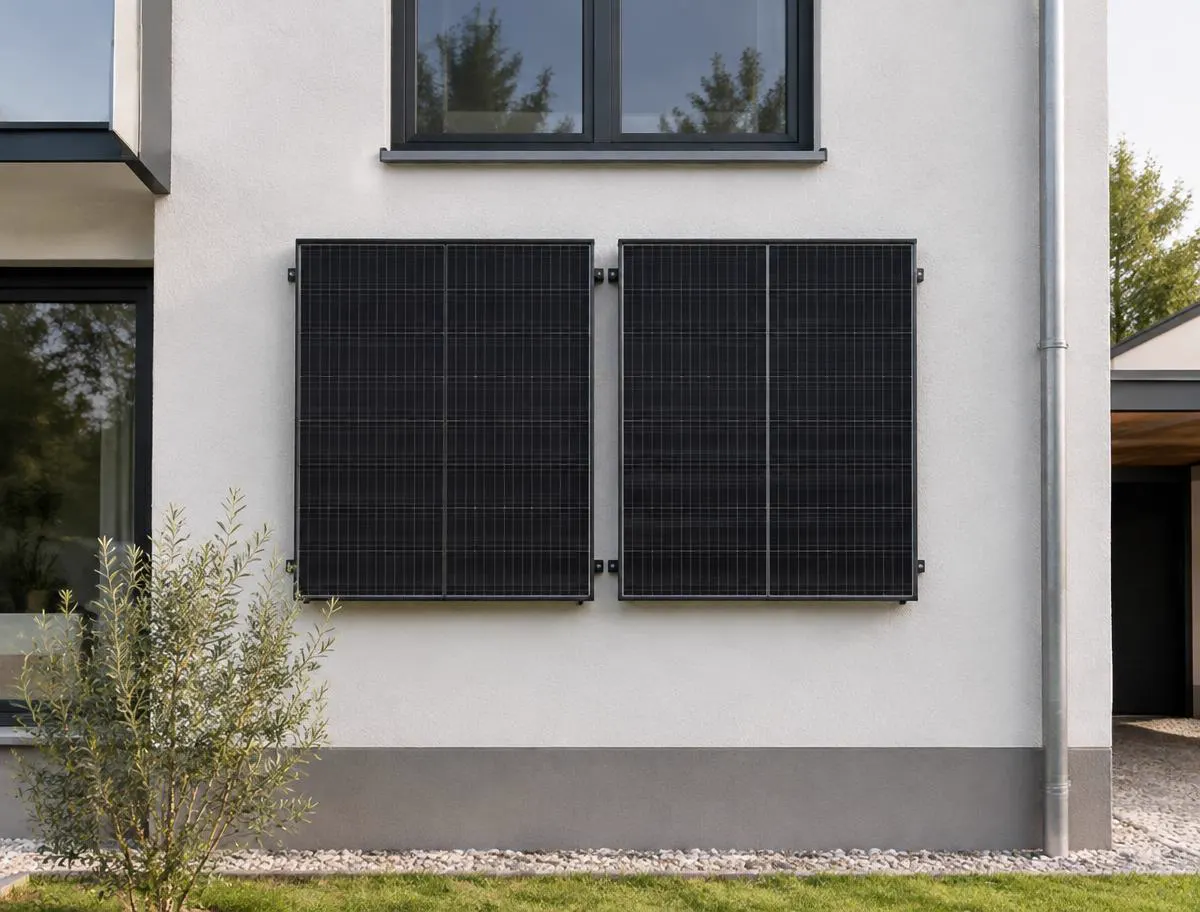
A solar fence (also called a solar railing or vertical balcony PV) is a plug-in solar system with panels mounted vertically, replacing or supplementing a conventional garden fence, terrace railing or balcony balustrade.
Technically, it works just like a balcony solar system: a microinverter converts the panels’ direct current into alternating current, which is fed directly into your home’s electrical system through a Schuko plug.
Since 2024, the system only needs to be registered in Germany’s Marktstammdatenregister (MaStR, the national register). For typical household-sized systems, no electrician or planning permission is required.
Who benefits from a solar fence?
A solar fence is particularly interesting for:
- Tenants with a garden: no south-facing balcony, but enough sunny fence space.
- Owners of detached homes: as an addition to rooftop PV, or when the roof is already full.
- Terrace owners: put vertical railings to use rather than leaving them empty.
- People with a purely east-facing or west-facing balcony: two panels facing opposite directions (east + west) smooth out the daily generation profile.
How much electricity does a solar fence generate?
Vertical panels have one significant disadvantage compared with a tilted installation: the angle of the sunlight is less than ideal. In the morning and evening, the rays strike at a shallow angle; at midday, with a south-facing installation, almost perpendicularly. This is exactly the opposite of the ideal arrangement.
Annual output comparison (800 W system, Munich)
| Orientation and tilt | Annual output | Share of optimum |
|---|---|---|
| South, tilted at 35° (optimal) | ~820 kWh | 100% |
| South, 90° vertical (solar fence) | ~600 kWh | ~73% |
| East, 90° vertical | ~420 kWh | ~51% |
| West, 90° vertical | ~410 kWh | ~50% |
| East + west, 400 W each, vertical | ~660 kWh | ~80% |
What does a solar fence cost in 2026?
Solar fences are available as complete kits, or you can assemble one yourself using standard balcony solar components.
| Setup | Power | Approximate price |
|---|---|---|
| Complete kit with mounting brackets (2 panels, vertical) | 800 W | €450 to €700 |
| DIY using a standard balcony solar system + vertical mounting brackets | 800 W | €380 to €550 |
| Solar fence with battery storage (1.5 kWh) | 800 W + battery | €950 to €1,400 |
Special solar railing kits with panels integrated into the frame (for example, from Solarimo, Yuma or Nüwa) cost a little more but look noticeably more premium.
Payback calculation
Example: south-facing, vertical, 800 W, Berlin.
With an east-west combination and 60% self-consumption:
The key to a solar fence is self-consumption: because an east-west setup generates electricity in the morning and evening, it fits everyday routines better. This significantly improves its financial viability.
Legal position in 2026
In Germany, solar fences follow the same rules as balcony solar systems:
- Registration: free registration in the Marktstammdatenregister (MaStR), taking less than 10 minutes.
- Inverter limit: a maximum feed-in power of 800 W per household.
- Tenants: since October 2024 (§ 554 BGB, the German Civil Code), tenants have had a legal right to installation, including on fences and railings, provided no permanent damage is caused.
- Planning permission: generally not required. At normal dimensions, it is considered a privileged development in the Außenbereich (areas outside built-up settlements).
Do not forget grants
Many German municipalities and federal states support plug-in solar systems regardless of how they are installed. Solar fences are often eligible too, provided they meet the technical requirements.
Individual cities, such as Munich, Hamburg and Stuttgart, offer grants of up to €500. Check your area in our incentive finder.
Calculate output for your location
Whether a solar fence pays off for you depends heavily on your location, orientation and consumption profile. The BalkonSonne app calculates this for you, including vertical installations and east-west configurations.
I valori di questa guida sono esempi tipici per la Germania e dipendono da posizione, orientamento, ombreggiamento e prezzo dell'elettricità. Il tuo risultato può essere diverso.
Verifica la tua posizione in 2 minuti
Scansione del cielo gratuita nel browser dello smartphone. Nessun download.
Avvia la scansione gratuita